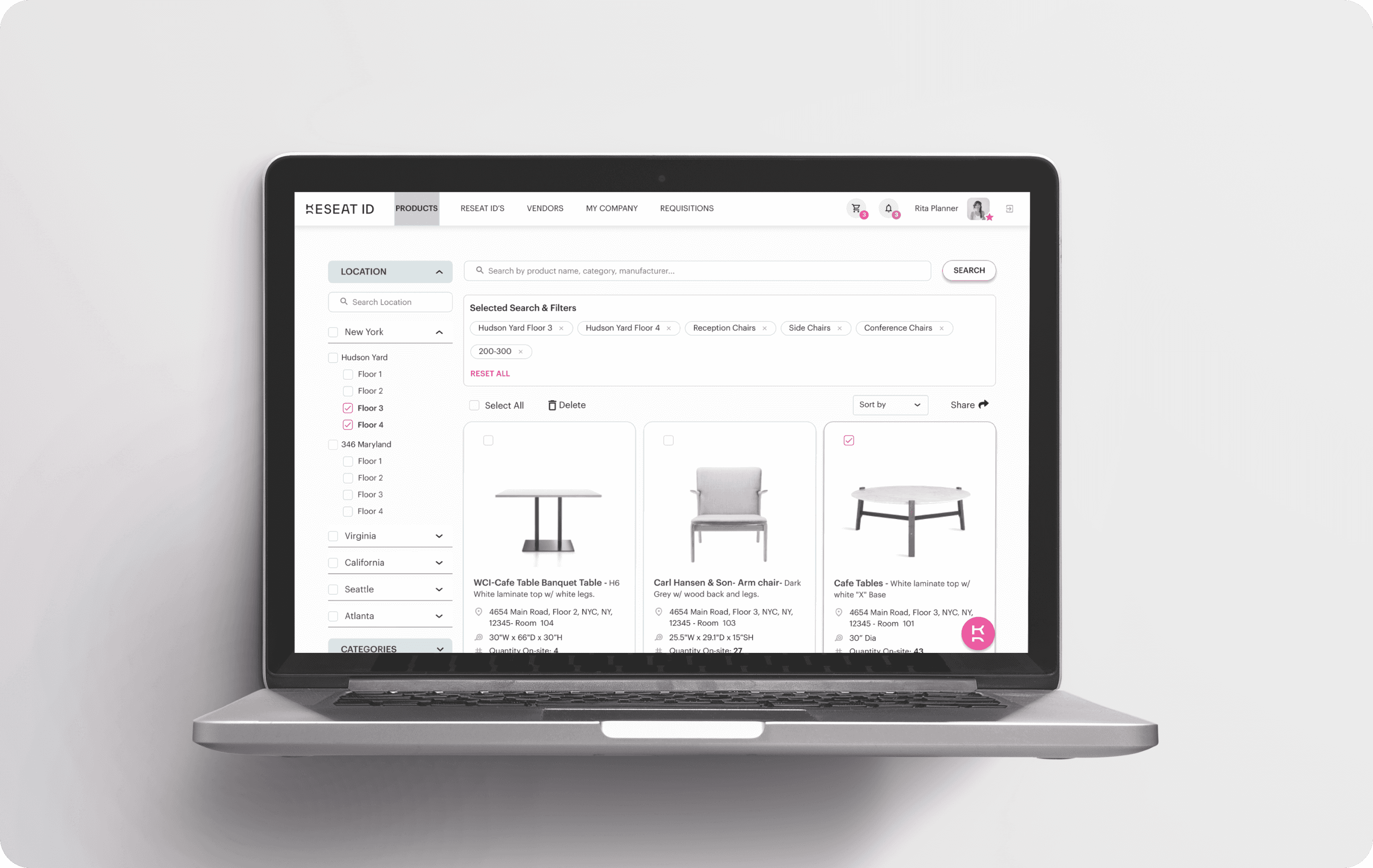
Office Furniture Management App digitized 97% of manual work, communication, and orders, enabling 85% of users to easily track furniture across buildings.
My Role
UX Designer
Tools
Figma, Jira, After Effects
Responsibilities
User Research
UX Design
Design System
Usability Testing
Prototyping
Furniture Management Tool - Reseat ID
Reseat ID is a tool for furniture dealers, architects, & brands to give commercial furniture a second life.
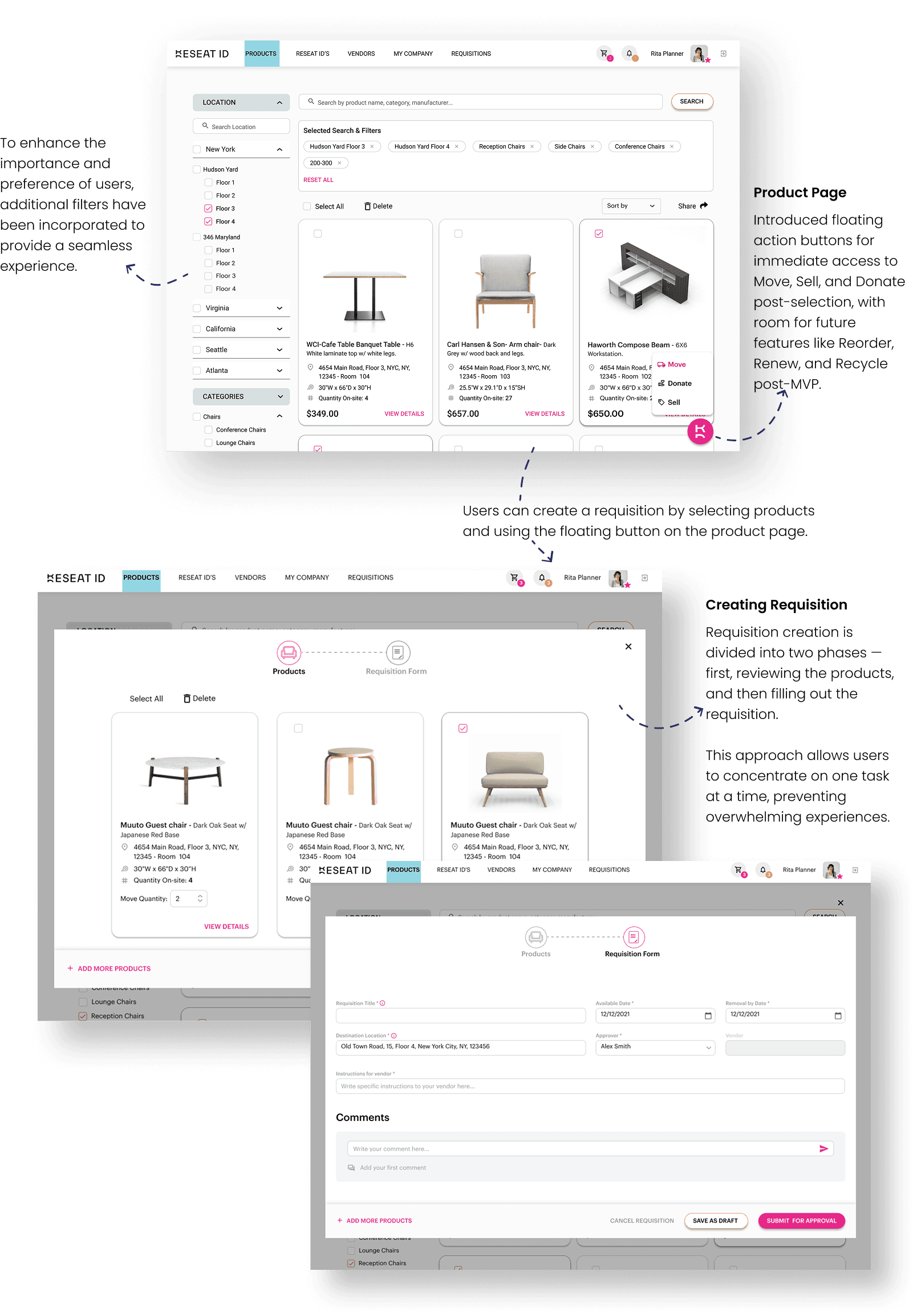
A one-stop platform for companies to manage their furniture and help users create requisition requests to sell/move/donate their furniture.
Goals
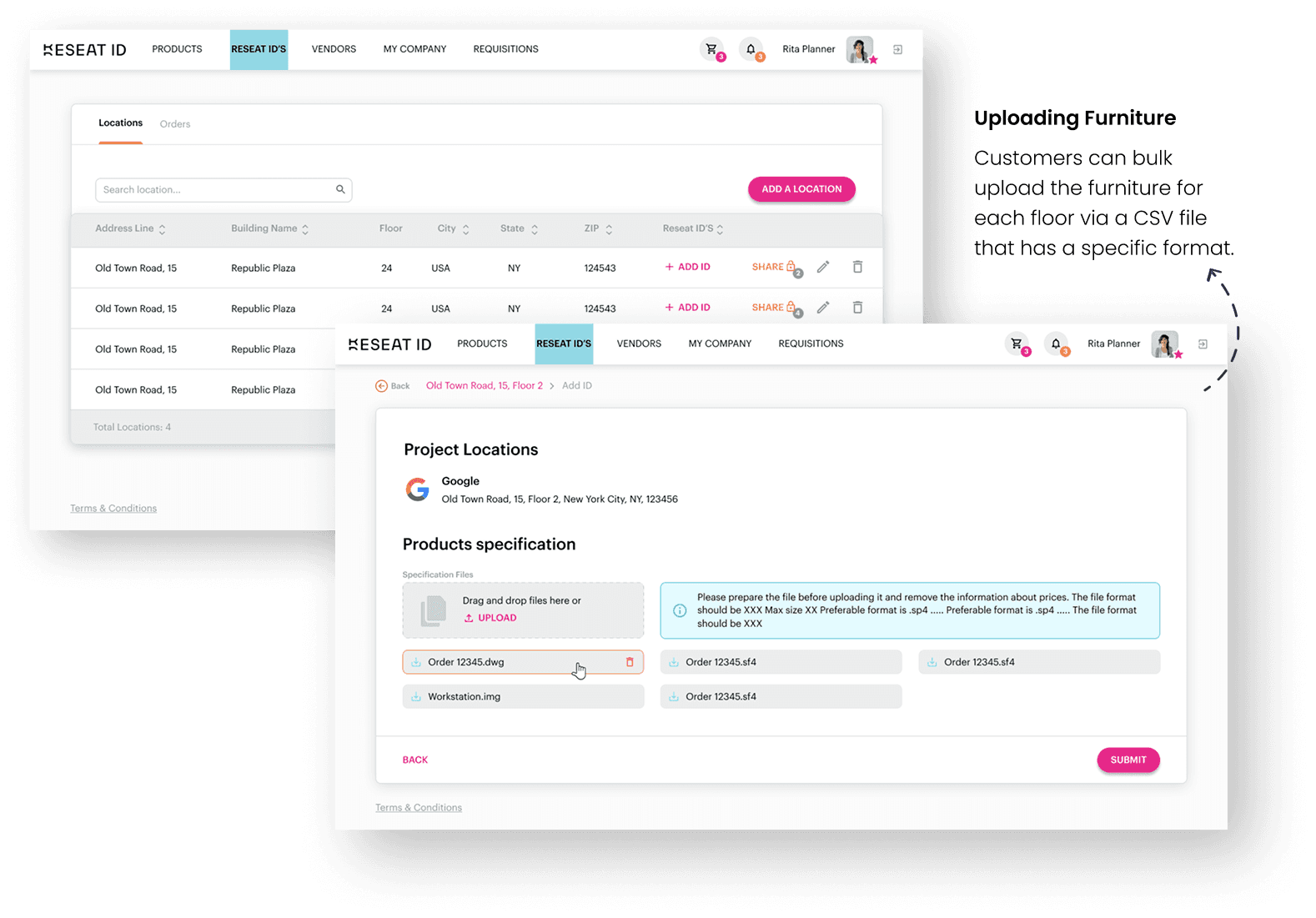
Companies upload furniture inventories by their office location.
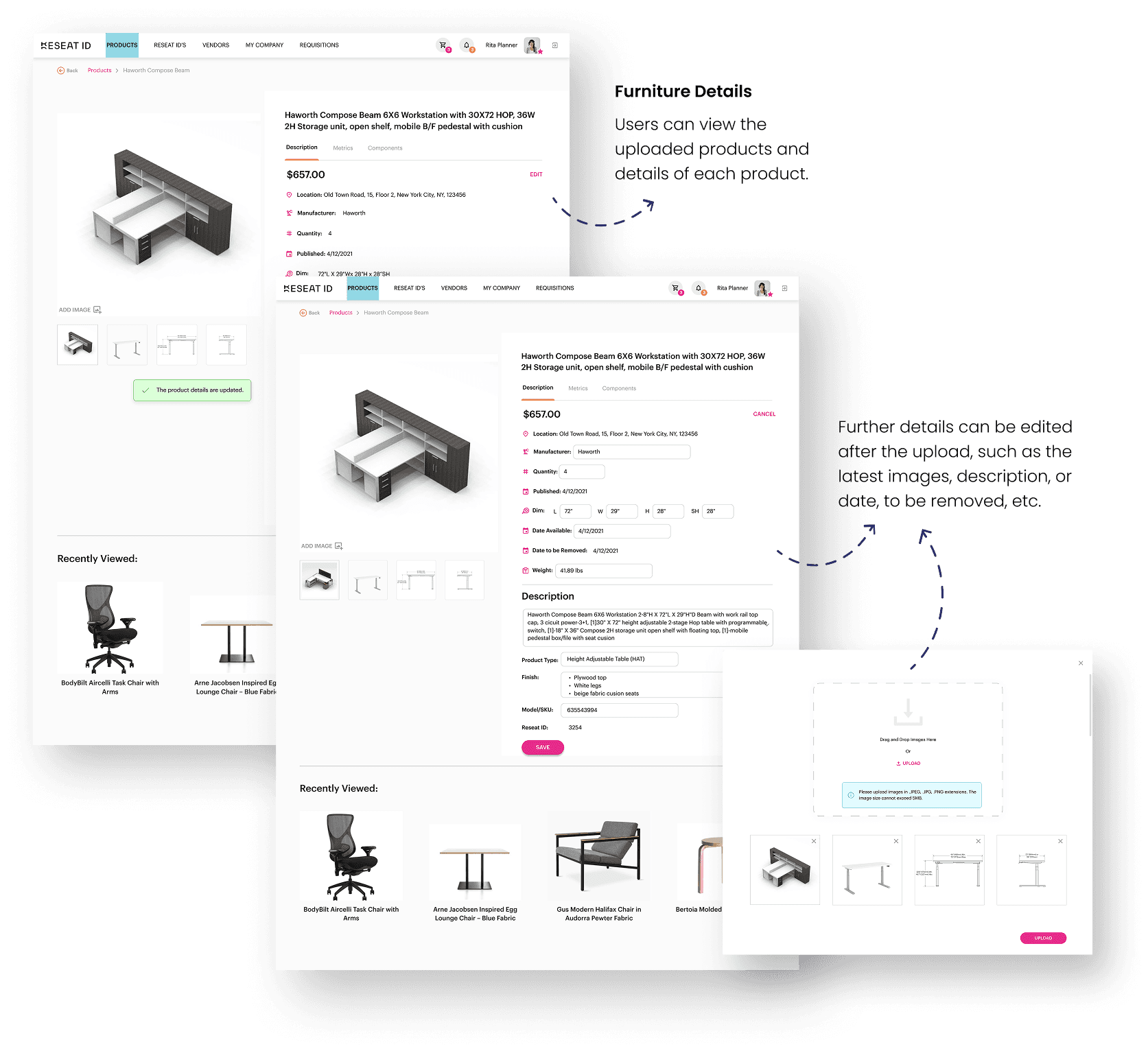
Each piece of furniture receives a unique Reseat ID.
Companies can track the furniture throughout its lifecycle.
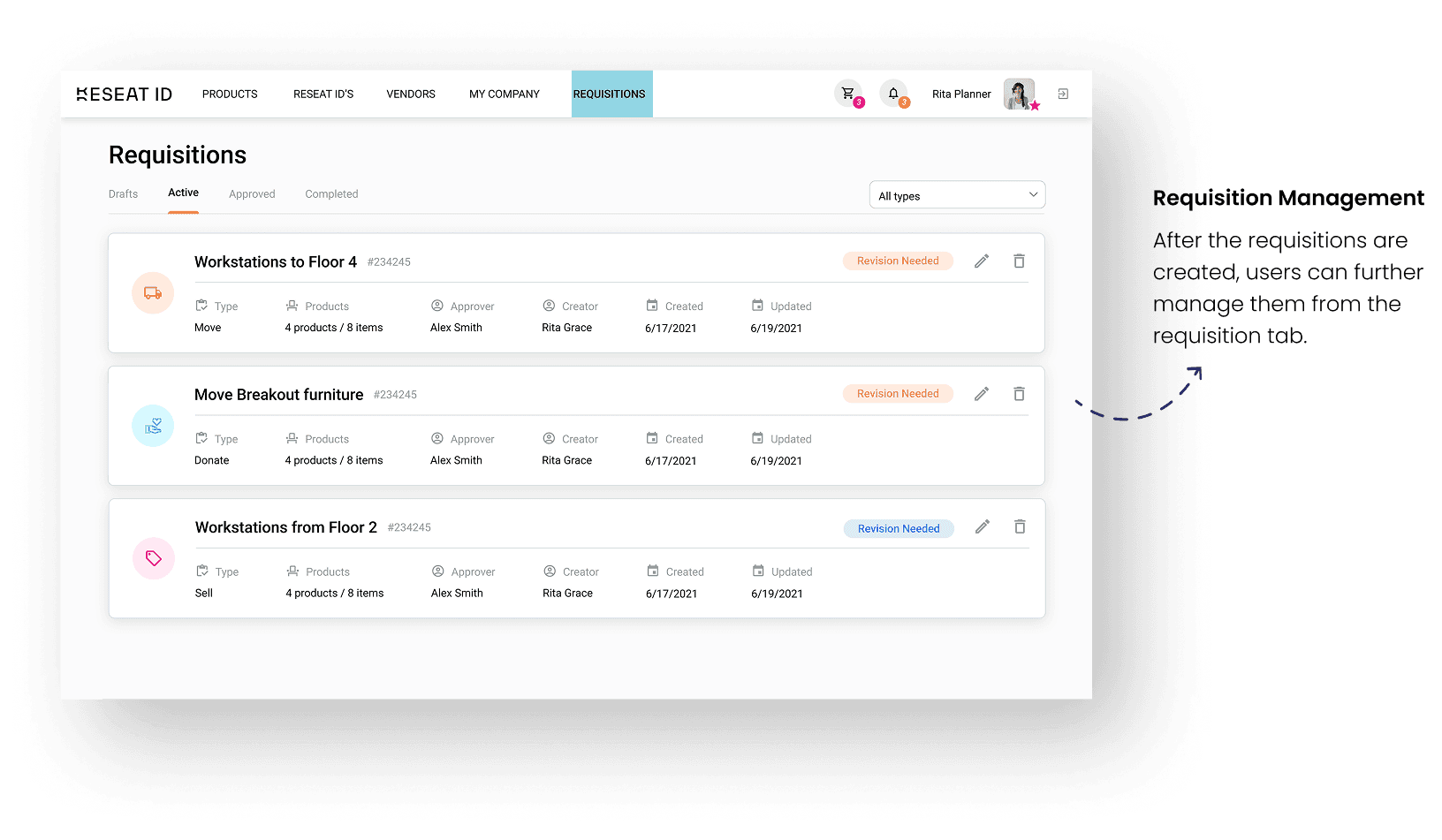
Create Requisitions for vendors to Move/Sell/Donate their furniture.
Success Metrics
97%
Workflows Digitized
88%
Easier Furniture Tracking
85%
User Satisfaction
Problem Statement
Great office furniture is built to last. But 99% of it ends up in a landfill because companies don’t have a proactive plan in place when getting rid of their office furniture.
Breaking this cycle of waste by helping companies plan for the lifecycle of furniture – right from the time of purchase. Because that is the only way to keep it out of landfills.
Generative Research
I conducted 1:1 interviews with 5 people from the furniture industry to understand the User Problems and Goals. On the basis of user interviews, I conceptualized the user personas. These helped to paint a clear and realistic picture of users’ goals, needs, and behaviors.
Research Insights
Manual furniture relocation within growing offices is error-prone.
Tracking furniture across locations is challenging without a system.
Email-based orders frustrate users; they want unified tracking.
Discovery Sessions
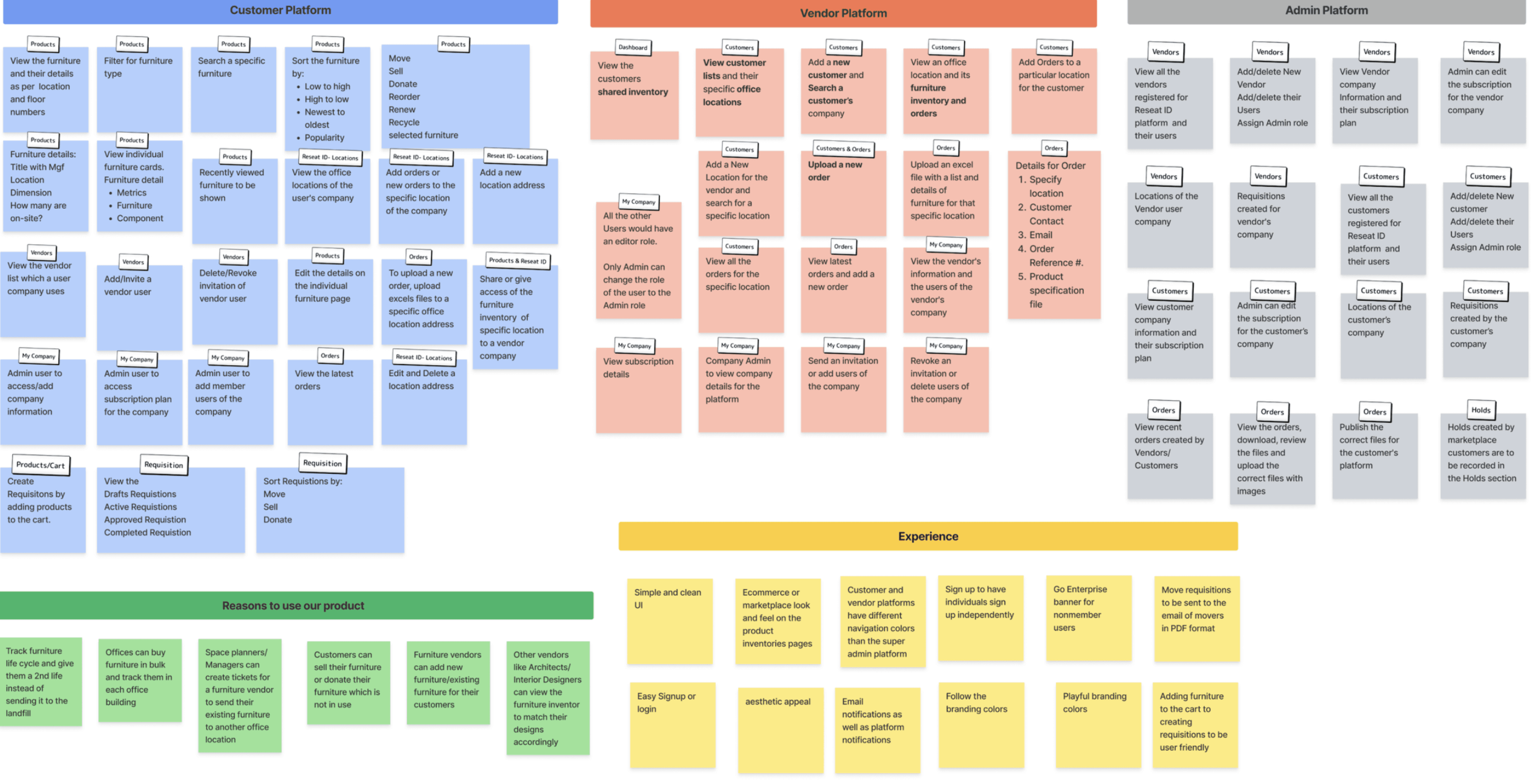
Further discovery sessions helped me understand users' needs, and I conducted a card-sorting exercise to clarify their wants and needs.
Task Analysis
After understanding the workflow, to enhance usability and user satisfaction, I analyzed the tasks users perform to achieve their goals in a digital product and then worked to elevate and optimize the sequence of steps they would take to accomplish these tasks.
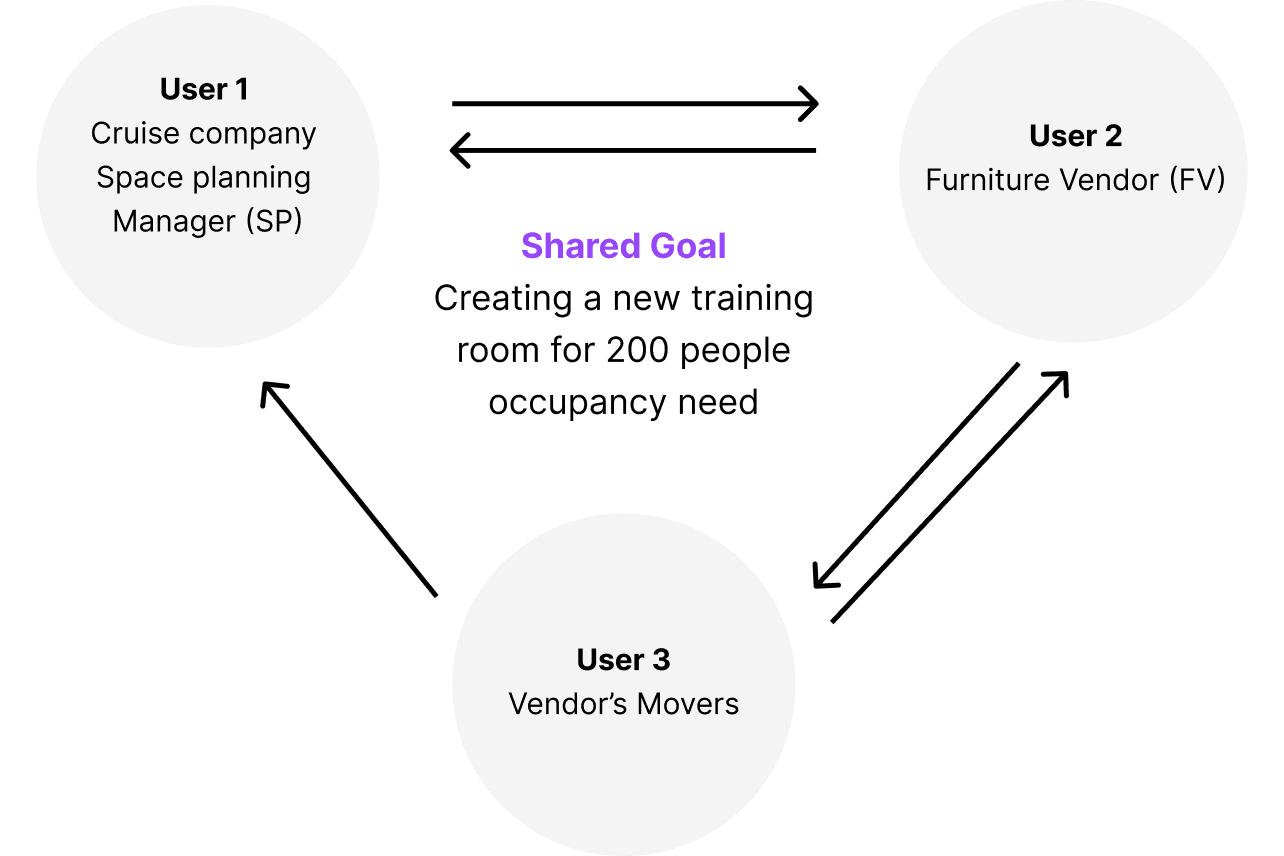
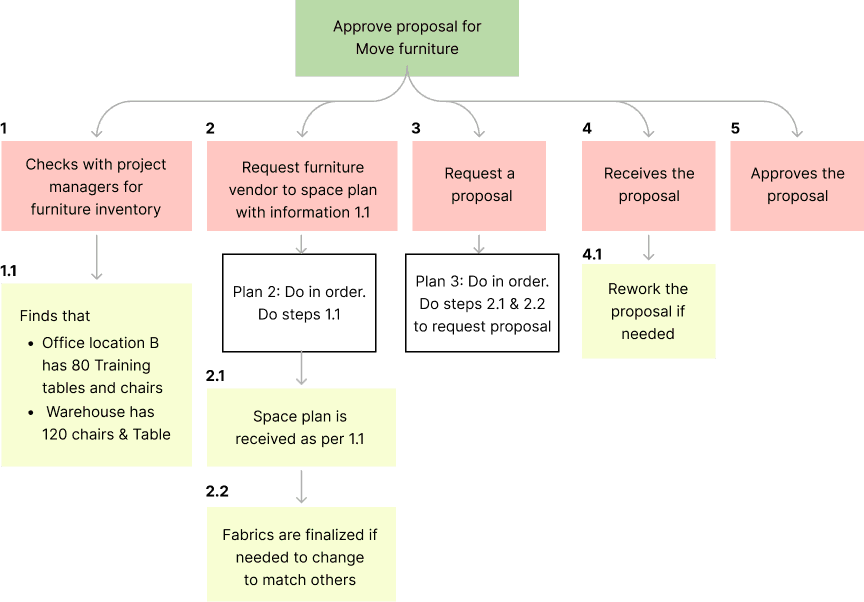
User 1 (Space Planner): Approve proposal to relocate existing furniture between offices based on occupancy needs, typically with the company’s designated furniture vendor.
User 2 goal: Furniture vendor handles company office furniture requests, creates space plans, and submits proposals.
User 3 goal: Movers: Fulfill furniture delivery request before installation day
Ideation Phase
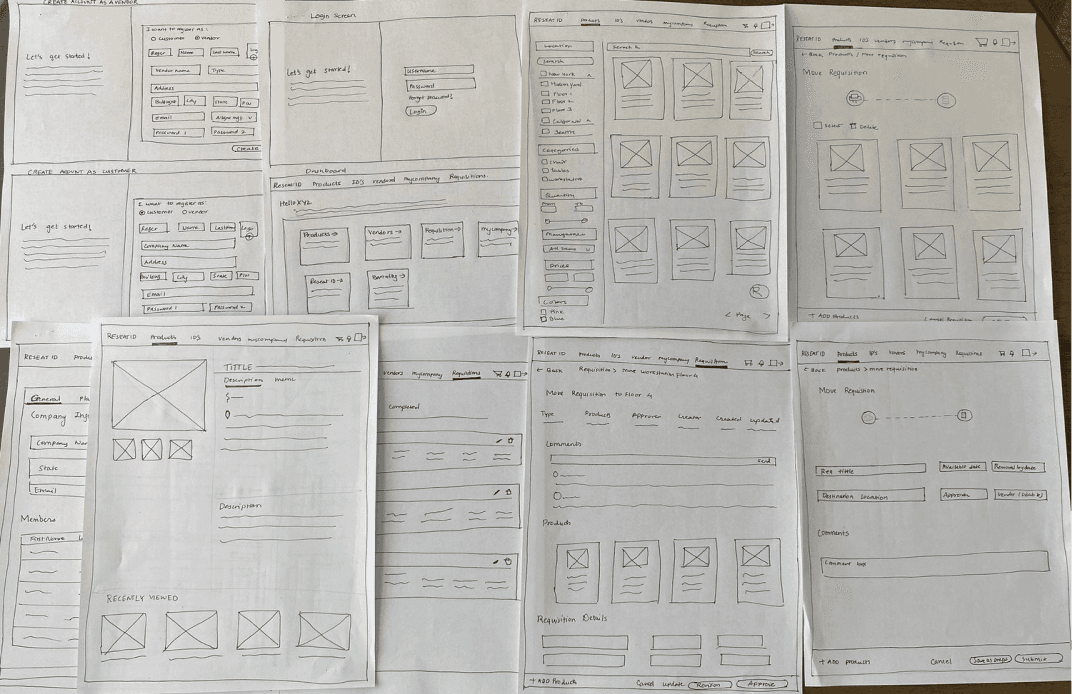
User flow diagrams helped outline the customer platform connected to Admin and Vendor systems. I listed screens, sketched wireframes, and built a style guide in parallel—supporting ideation while ensuring design consistency.
Design Decision
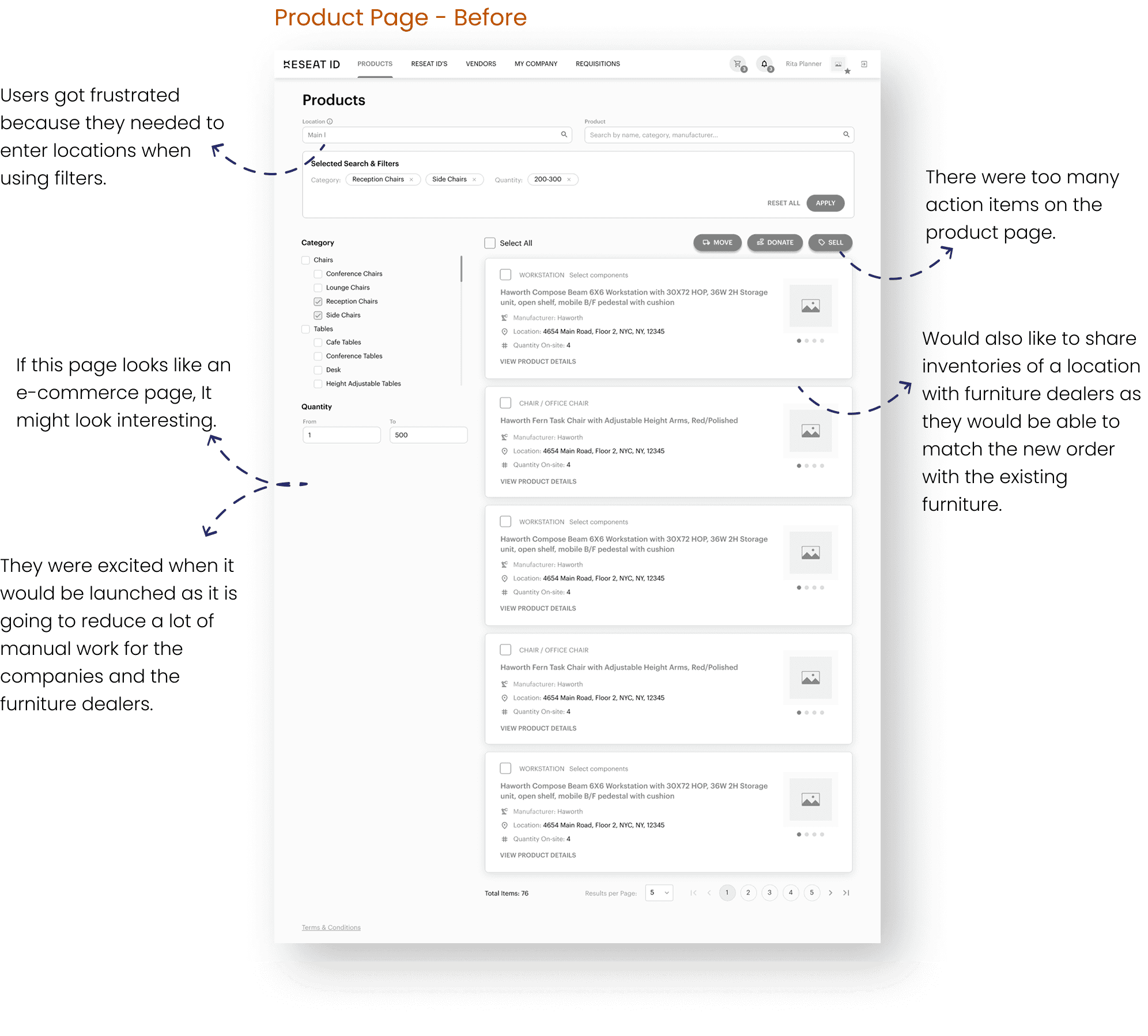
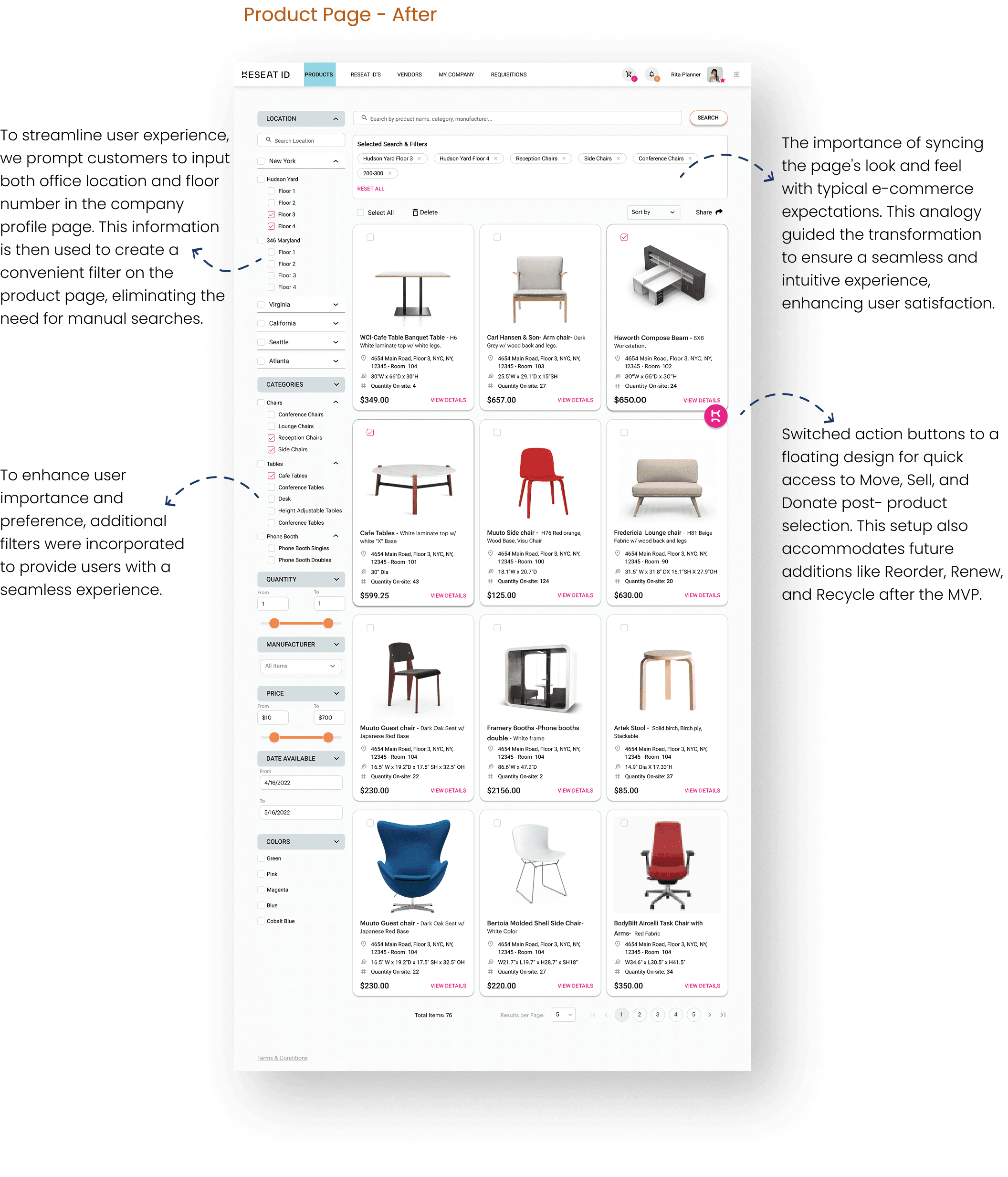
After digitizing the selected sketches, I tested mid-fidelity designs and iterated on them to reach the final MVP. Below is an overview of the product page design decisions and the evolution to the final experience.

MVP Designs
Results
97% of manual work and email communication was digitized through the platform, enabling streamlined work orders and approval tracking.
88% of users were able to easily track and manage furniture across different office buildings, including monitoring lifecycle status.
85% of users rated the experience as excellent and recommended the platform in the in-app survey.
Reflections
System Thinking is Crucial in Experience Design
This project helped me learn the process of end-to-end product design and understand why system thinking is crucial in experience design. When designing a platform containing both service providers and receivers, it is important to include both sides of users in designing the system. Even though I can only start with one side of the platform, I need to understand other users to make decisions. Design decisions and features for one side are usually decided by the need and preferences of the other side.
Documentation is Important
Documentation helps to ensure consent and expectations. It helps to tell the narrative for decisions made, and how the team or the users responded to different situations.